Personal AI Assistants on Devices: Privacy, Benefits and Technical Limitations
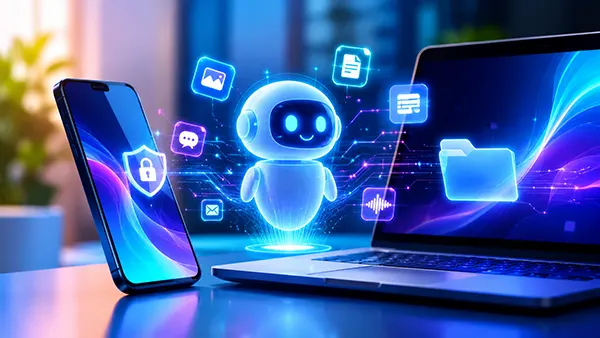
Artificial intelligence is increasingly moving from remote data centres directly onto personal devices. Smartphones, laptops and tablets released in 2025 and 2026 are capable of running advanced language models locally, allowing users to access AI features without sending every request to external servers. Companies such as Apple, Google, Samsung, Microsoft and Qualcomm have invested heavily in on-device AI processing, making personal assistants faster, more private and more responsive. At the same time, local AI introduces new challenges related to hardware performance, storage requirements and model capabilities. Understanding both the advantages and limitations of personal AI assistants is essential for anyone considering how these technologies fit into everyday life.
Why On-Device AI Has Become a Major Technology Trend
The shift towards local AI processing has been driven largely by growing concerns about data privacy. Many users are uncomfortable with sensitive information being transmitted to remote servers whenever they interact with an AI assistant. By processing requests directly on a device, personal information such as messages, notes, calendar entries and documents can remain under the user’s control.
Another factor is speed. Local processing eliminates the need to send data across the internet and wait for responses from cloud infrastructure. As a result, many tasks can be completed almost instantly. Features such as text summarisation, image analysis and voice recognition benefit significantly from reduced latency.
Advances in specialised hardware have also contributed to this trend. Modern processors now include dedicated neural processing units (NPUs) capable of handling AI workloads efficiently. These chips allow complex models to operate with lower power consumption than traditional CPU or GPU-based approaches.
How Manufacturers Implement Local AI Capabilities
Different technology companies have adopted varying approaches to on-device AI. Apple’s recent generations of devices rely on integrated AI frameworks that distribute workloads between the CPU, GPU and Neural Engine. This architecture allows many AI tasks to run without an internet connection.
Google has focused heavily on hybrid systems. Some requests are processed entirely on-device, while more demanding operations can be transferred securely to cloud infrastructure when necessary. This balance helps maintain performance while supporting more advanced capabilities.
Microsoft and several PC manufacturers have introduced AI-focused computers equipped with NPUs capable of handling billions of operations per second. These systems support local language models, image generation tools and productivity features that previously required cloud-based processing.
Privacy Advantages and Practical Benefits for Users
One of the most significant benefits of personal AI assistants is increased privacy protection. When information remains on a device, there is less risk associated with data transmission, third-party processing and potential server breaches. This is particularly important for professionals handling confidential documents or sensitive communications.
Offline functionality represents another practical advantage. Users can continue accessing AI features even when travelling, working in remote areas or experiencing connectivity issues. Tasks such as note organisation, document summarisation and language assistance can remain available without internet access.
Local processing may also improve personalisation. Because information stays on the device, assistants can analyse user preferences, habits and routines without necessarily exposing that information to external systems. This can lead to more relevant suggestions while maintaining a greater degree of control over personal data.
Areas Where Personal AI Assistants Deliver Real Value
Productivity is one of the strongest use cases for on-device AI. Assistants can organise meetings, draft emails, summarise lengthy documents and help users manage daily schedules more efficiently. These capabilities save time while reducing the need for multiple software tools.
Accessibility features have also improved considerably. Modern AI assistants can provide real-time speech transcription, text-to-speech conversion and language translation directly on a device. Such functions help make technology more accessible to people with different communication needs.
Creative work benefits as well. Writers, designers and content creators can use local AI tools for brainstorming, editing, image enhancement and workflow automation. Because processing occurs on-device, creative materials can remain private throughout the development process.
Technical Constraints That Still Limit On-Device AI
Despite rapid progress, local AI systems face important technical limitations. The most significant challenge is computational power. Large language models often require enormous amounts of memory and processing resources, making it difficult to run the most advanced versions entirely on consumer hardware.
Battery consumption remains another concern. Although dedicated AI processors are becoming more efficient, intensive AI workloads can still increase energy usage. Manufacturers continue working to balance performance with battery life, particularly on mobile devices.
Storage requirements can also be substantial. Advanced language models may require several gigabytes of storage space, creating challenges for users with limited device capacity. As models become more sophisticated, efficient compression techniques will become increasingly important.
The Future of Personal AI Assistants Beyond 2026
Industry experts expect hybrid AI architectures to become increasingly common. Devices will process routine tasks locally while relying on secure cloud resources only for highly demanding operations. This approach combines privacy benefits with access to more advanced computational capabilities.
Hardware improvements are likely to play a major role in future development. More powerful NPUs, increased memory capacity and improved energy efficiency will enable larger models to operate directly on consumer devices. This could significantly reduce dependence on remote processing.
At the same time, regulatory requirements related to privacy, transparency and responsible AI use are expected to influence product design. Companies developing personal AI assistants will need to balance technological innovation with user trust, security and compliance obligations. The result is likely to be a new generation of assistants that are faster, more capable and more respectful of individual privacy than earlier cloud-dependent systems.